

Models
US Government Blocks Anthropic Fable 5 & Mythos 5 (2026)
US government ban on Anthropic: Commerce Dept ordered suspension of Fable 5 & Mythos 5 on June 12, 2026. Full timeline of the 4-month feud.
The US government ban on Anthropic’s two most advanced AI models landed Friday, June 12, 2026. The Commerce Department ordered Anthropic to suspend all foreign access to Fable 5 and Mythos 5, just three days after their launch. Anthropic responded by disabling the models for everyone globally. The order cites a single alleged jailbreak. Anthropic calls it a misunderstanding. The backdrop is a four-month fight between the Trump administration and Anthropic over Pentagon autonomy contracts. And the consequences could reshape where AI gets built, sold, and trusted.
For context on what was blocked, see our Claude Fable 5 launch coverage. For the broader model landscape, see Latest AI Models Compared (2026). For how this affects developers, see our guide to the best new AI tools for developers.
What happened
At 5:21 PM ET on Friday, June 12, 2026, the Bureau of Industry and Security (BIS) under the U.S. Commerce Department issued an export control directive ordering Anthropic to “suspend all access to Fable 5 and Mythos 5 by any foreign national, whether inside or outside the United States, including foreign national Anthropic employees.”
Anthropic had launched both models on June 9. Fable 5 was the public version, the first “Mythos-class” model available to anyone, with safety classifiers that fall back to Opus 4.8 on sensitive queries. Mythos 5 was the same model with some safeguards lifted, restricted to vetted Project Glasswing partners. By Friday night, both were gone.
The company could not separate users by nationality fast enough. So it took both models offline for everyone. American citizens lost access alongside users in the UK, Canada, Japan, India, and everywhere else. Amazon AWS revoked Bedrock access “for all users in all regions” within hours.
All other Anthropic models, Claude Opus 4.8, Sonnet, and Haiku, are untouched. You can still use them through the API, the Claude apps, and cloud platforms.
This is the first time the U.S. government has used export controls to block access to a specific AI model. Not a company. Not a chip. A model.
Why the government says it did this
The Commerce Department cited “national security authorities” and told Anthropic it had learned of a method to bypass Fable 5’s cybersecurity safeguards.
The alleged jailbreak? In Anthropic’s own words, it “essentially consists of asking the model to read a specific codebase and fix any software flaws.”
That is it. Ask Fable 5 to find bugs, and in some cases, it might find some.
The government provided only “verbal evidence,” according to Anthropic. No written report. No technical documentation. No adversarial testing results. Just a phone call or meeting where someone said the model’s safeguards could be bypassed. That’s not a process. It’s a claim.
Anthropic investigated immediately. It found only “a small number of previously known, minor vulnerabilities.” The company says “all appear relatively simple, and other publicly-available models are able to discover them as well.” The capability level shown by the alleged jailbreak is, in Anthropic’s assessment, “widely available from other models including OpenAI’s GPT-5.5.”
And here is the part that matters: Anthropic says “perfect jailbreak resistance is not currently possible for any model provider.” If the government’s standard is that a model can never be jailbroken, no frontier model can ship. Period. Not from OpenAI. Not from Google. Not from anyone.
But here’s the twist: Anthropic spelled this out directly in their response. “If this standard was applied across the industry, it would essentially halt all new model deployments.” They’re not wrong.
The bigger story: a four-month feud with the Pentagon
The ban did not come out of nowhere. It is the latest move in a conflict that started in January 2026, when Anthropic and the Pentagon began negotiating a large contract for AI services.
January 2026: Pentagon-Anthropic contract negotiations begin. The Pentagon pushes for “any lawful purpose” language that would cover autonomous weapons systems and domestic surveillance. Anthropic refuses to remove standard safety guardrails from its technology.
February 27, 2026: Contract talks collapse. On the same day, two things happen. First, Trump signs an executive order banning all federal agencies from using Anthropic products. The Pentagon formally declares Anthropic a “supply chain risk.” Second, OpenAI announces it has reached a deal with the Pentagon.
The timing is hard to read as coincidence. One AI company refuses to drop its safety commitments, gets banned and labeled a supply chain risk the same afternoon another company signs on the dotted line.
Public insults followed. Undersecretary Emil Michael called Dario Amodei “a liar” with a “God-complex” who “wants nothing more than to try to personally control the US Military.” Senators Markey and Van Hollen pushed back, calling the Pentagon’s “threats to punish an American AI company for refusing to surrender basic safeguards” a “chilling abuse of government power.”
March 6, 2026: Anthropic sues the U.S. government.
March 24, 2026: A federal judge weighs in. The government’s ban, the judge said, “looks like a punishment attempt” rather than a genuine security measure.
June 1, 2026: Anthropic files for an IPO with a valuation of roughly $965 billion.
June 9, 2026: Anthropic launches Fable 5 and Mythos 5. Strong partner reactions from Stripe, Cursor, GitHub, and others. The models are instantly the most capable publicly available AI systems.
June 10, 2026: Dario Amodei gives an interview to Bloomberg. He says he believes the government should be able to block unsafe AI models from release, as long as there is a clear statutory process based on technical evidence.
June 12, 2026: The Commerce Department blocks Fable 5 and Mythos 5. No clear process. No written evidence. Verbal claims only.
The sequence from June 10 to June 12 is especially brutal. Amodei said government oversight of unsafe models was legitimate. Two days later the government used that exact argument structure against his own company, without the transparency or process he said was necessary.
There is another layer of irony. Anthropic spent years being the loudest voice in the room calling for AI regulation. Company executives testified before Congress. They published detailed safety frameworks. They warned that their own models were dangerous enough to need government oversight. Now the government is citing those same warnings as justification to shut down Anthropic’s most advanced product while leaving competitors untouched. It’s a brutal irony, and it’s going to shape how every AI company talks about their own products going forward.
Community and expert reactions
The news broke late Friday. By Saturday morning, the threads were filling up.
On Reddit’s r/singularity, the story hit 504 upvotes and over 1,400 comments. The top-voted sentiment was straightforward: “This is just the Trump admin bullying Anthropic.”
r/ClaudeAI was less political and more practical. 714 upvotes, over 900 comments. One user captured the mood: “Man. Right after I spent $250 on the Max 20x Usage plan.”
Subscribers on the Max plan had paid for top-tier access. Some had been using Fable 5 for three days. Now it was gone with no refund announcement and no timeline for restoration.
Dean Ball, a former Trump administration AI policy advisor, delivered the most quoted reaction. “I can’t tell if this is lawfare against Anthropic in particular or extreme national-security hawkery,” he wrote. “Regardless, it is simply cartoonish.” He pointed out the contradiction at the core of the decision: “An administration whose posture is that we should export advanced AI chips to China, which also wants to ban… Britain (and every other non-American on Earth)… from using our best models? I have no words.”
Ball’s investment take was even sharper: “I could not possibly recommend investing in American AI to any investor.”
Gary Marcus, the cognitive scientist and frequent AI critic, said the move “makes little sense.” His concern was about talent flight. The order, he argued, would convince Chinese-born AI researchers working in the U.S. to return to China, where their access would not be subject to sudden political decisions. It also makes investors question whether American AI companies are safe bets when the government can shut down your product with a phone call.
Kirsten Davies, the Pentagon CIO, offered the administration’s counterargument: “Some things are simply more important than revenue cycles, clickbait, and pre-IPO valuation. America First. Always.”
The Indian press covered the story heavily. India Today and the Times of India ran prominent pieces. India has a large base of affected users. The country is a major market for Anthropic’s API business.
Hacker News had no dedicated story thread as of Saturday morning. The news was too fresh. But related stories about the earlier federal ban and lawsuit had shown a community broadly sympathetic to Anthropic’s position.
What this means for you right now
If you use Claude, here is the practical situation as of June 13, 2026.
Fable 5 and Mythos 5 are offline. You cannot access them through the API, the Claude apps, or Amazon Bedrock. There is no workaround. Anthropic cannot separate users by nationality, so the models are gone for everyone until the government clarifies or rescinds the order or Anthropic builds nationality-filtering infrastructure.
Claude Opus 4.8, Sonnet, and Haiku work fine. The ban is specific to Fable 5 and Mythos 5. Your existing workflows on Opus, Sonnet, or Haiku are unaffected. API keys keep working.
If you paid for Max or another Fable 5-inclusive plan, Anthropic has not announced a refund policy. The company said it is “working to restore access as soon as possible.” No timeline. No guarantee. If you spent $250 for the Max 20x Usage plan, you are currently getting Opus 4.8, not Fable 5, with no price adjustment.
If you are a developer on the API, your claude-fable-5 model ID calls will fail. You should switch to claude-opus-4-8 in the meantime. The API integration path is identical. You change the model string and get the next-best model Anthropic offers.
If you are outside the United States, this is your first taste of AI export controls. It may not be the last. The precedent has been set: a government can, with verbal evidence and no formal process, block your access to a specific AI model from a specific company.
What to use instead of Fable 5
Fable 5 was the best model Anthropic ever shipped. It is gone for now. Here is what you should use instead, depending on what you needed Fable for.
If you needed top-tier coding
First pick: Claude Opus 4.8. It is still available through the API and Claude apps. It is the same company, same safety framework, same API integration. You lose the Mythos-class capability bump, but Opus 4.8 remains a top-three coding model globally. The API call is identical. Change claude-fable-5 to claude-opus-4-8 in your model string and you are back online. For a detailed breakdown, see our Claude Fable 5 launch coverage which includes Opus 4.8 benchmarks for context.
Second pick: GPT-5.5 Codex via ChatGPT or API. OpenAI’s flagship is the coding benchmark leader as of June 2026. It is more expensive than Opus 4.8 at roughly $15/$60 per million tokens, but the ecosystem (Cursor, Copilot, ChatGPT desktop) is deeper. If your workflow is agentic and you need the strongest terminal scores, GPT-5.5 is currently the best available model. No government ban. No access restrictions. See our DeepSeek V4 vs ChatGPT vs Claude comparison for head-to-head numbers.
Third pick if you need open weights: Kimi K2.7 Code. Released the same week as the Fable ban, K2.7 Code beats Opus 4.8 on agentic reliability benchmarks (MCP Mark Verified: 81.1 vs 76.4) and is open-source under Modified MIT. It has multimodal input, 256K context, and a preserve_thinking mode that maintains reasoning across multi-turn coding sessions. At $0.95/$4.00 per million tokens, it costs less than Opus and far less than GPT-5.5. Full breakdown in our Kimi K2.7 Code post.
If you needed long-context agents
MiniMax M3 is the strongest open-weights option for combining long context (1M tokens) with coding and multimodal input. It scores 59.0% on SWE-Bench Pro, roughly tying GPT-5.5 and approaching Opus, at one-tenth the API price. The MSA sparse attention mechanism makes the 1M context window practical rather than marketing fluff. Native image and video input is included. The catch: a restrictive community license. See our full MiniMax M3 review.
DeepSeek V4 Pro is the cost champion. It is 10-15x cheaper than Opus on input and the DeepSeek API infrastructure is more mature than any other Chinese provider. No multimodal, but for text-only agent workloads at scale, it is the pragmatic choice. DeepSeek also has the largest open-source community, meaning more frameworks, more tutorials, and more people who have already solved the problem you are about to hit. Our DeepSeek V4 comparison covers this in detail.
If you needed vision or document analysis
GPT-5.5 is the clearest replacement. Fable 5’s vision capabilities were state-of-the-art, but GPT-5.5’s multimodal stack (text, images, code, browsing) is equivalently capable for practical document analysis, chart interpretation, and screenshot-driven UI debugging. It costs more, but you get the same capability tier without the export control risk.
Gemini 3.5 Flash is worth a look for web design and UI work specifically. It leads on web design benchmarks and integrates naturally with Google’s ecosystem. It is cheaper than GPT-5.5. If your Fable 5 use case was more about visual output quality than coding or autonomous agents, Gemini may be a better fit.
What to avoid
Do not wait for Fable 5 to come back. There is no timeline. The government provided verbal evidence with no written documentation. Anthropic cannot negotiate against an invisible standard. This could resolve in days, or it could become a permanent feature of the regulatory landscape. Build your workflow around models that are available today. If Fable returns, you can migrate back. But do not leave your production systems waiting on a government decision.
The uncomfortable truth
We said this in our best new AI tools for developers guide: do not tie your entire stack to one model provider. The Fable ban is the most dramatic proof point yet, but it is not the only one. OpenAI has outages. Google deprecates models. Chinese labs have compliance requirements. A developer who can switch between Opus 4.8, GPT-5.5, and an open-weights model like K2.7 Code within the same deployment is more resilient than one who cannot. This week’s news makes that argument louder than any blog post ever could.


What this means for the AI industry
The precedent is the story. Here is what has now been established.
Export controls can target models, not just chips. Before June 12, export controls on AI were about hardware. Can NVIDIA sell H200s to Chinese companies? Can ASML ship EUV machines to specific fabs? The Commerce Department just proved it can reach inside a company and disable specific software products based on a capability claim.
No clear statutory process exists. The government cited “national security authorities” and provided verbal evidence. No formal determination. No published standard. No appeals process that the public can see. A company launched a product on Monday. On Friday, the product was gone. That is the full cycle.
The standard is unclear. If “the model can be prompted to find security vulnerabilities” is a blockable offense, every frontier model qualifies. GPT-5.5 can find bugs. DeepSeek V4 can find bugs. Gemini 3 can find bugs. Anthropic made this point in its response. The government has not explained why Fable 5 specifically crosses the line, or why the same behavior in GPT-5.5 does not.
Pre-IPO companies are particularly exposed. Anthropic filed for IPO on June 1. The ban landed on June 12. Whether or not the timing was intentional, the message to any AI company considering a public offering is clear: your most valuable product can be shut down overnight by a regulatory action with no clear standard and no published evidence. Dean Ball’s warning about not recommending American AI to investors is not hyperbole. It is a rational response to a new risk factor.
The global AI market could fragment. If the U.S. can block foreign access to American models, other countries will claim the same authority. China could block non-Chinese models. The EU could block models that do not meet its AI Act requirements. Every country can now point to the U.S. action as precedent. The result could be a balkanized market where developers and enterprises need to maintain relationships with multiple model providers across multiple jurisdictions just to keep their tools running.
Anthropic’s safety advocacy has become a liability. The company spent years telling governments that AI models could be dangerous and needed regulation. The government is now using that exact framing to restrict Anthropic’s products while leaving competitors who lobbied for less regulation untouched. It is a bitter outcome for a company that built its brand on being the responsible one.
The immediate fight is between one company and one administration. But the structure being built, export controls on software capabilities based on verbal national security claims, will outlast both of them.
Changelog
- 2026-06-13: First publish. Breaking coverage of the June 12 Commerce Department order blocking Fable 5 and Mythos 5, with full context on the Anthropic-government conflict.
Frequently asked
8 questionsWhy did the US government block Anthropic Fable 5 and Mythos 5?
On June 12, 2026, the Commerce Department ordered Anthropic to suspend foreign access to Fable 5 and Mythos 5, citing a potential jailbreak of Fable 5's cybersecurity safeguards. Anthropic says the jailbreak is narrow, the capabilities involved are widely available from other models including GPT-5.5, and no universal bypass exists. The action follows a months-long feud between Anthropic and the Trump administration over Pentagon contracts.
Were Claude Opus, Sonnet, and Haiku also blocked?
No. The Commerce Department's order specifically targets Fable 5 and Mythos 5 only. All other Anthropic models, including Claude Opus 4.8, Sonnet, and Haiku, remain fully available to users worldwide through the API, Claude apps, and cloud platforms like Amazon Bedrock.
Did the government block Anthropic models for Americans too?
The order required Anthropic to suspend access for all foreign nationals anywhere, including foreign national Anthropic employees. In practice, Anthropic could not implement nationality-based access control fast enough, so the company disabled Fable 5 and Mythos 5 for all customers globally to comply. American citizens lost access as a side effect.
What jailbreak did the government cite?
According to Anthropic, the alleged jailbreak "essentially consists of asking the model to read a specific codebase and fix any software flaws." Anthropic says it found only "a small number of previously known, minor vulnerabilities" and that the method's capability level is "widely available from other models including OpenAI's GPT-5.5."
Is this related to the Anthropic-Pentagon contract dispute?
Yes. Since January 2026, Anthropic and the Pentagon have been locked in a contract dispute over autonomous weapons and domestic surveillance. The Pentagon declared Anthropic a "supply chain risk" in February, banned Anthropic from all federal agencies on the same day OpenAI announced its own Pentagon deal, and multiple public insults were exchanged before the June 12 export control action.
Will I get a refund if I paid for Fable 5 access?
Anthropic has not announced a refund policy yet. Paid subscribers on the Max plan (up to $250/month) and API customers suddenly lost access without warning. The company said it is "working to restore access as soon as possible" but no timeline has been given.
What does this mean for the AI industry?
This is the first time export controls have been used to block a specific AI model. It sets a precedent that any country could restrict model access on national security grounds with no clear statutory process. Industry analysts warn this could fragment the global AI market and make investors question whether American AI companies are safe bets.
Can other countries now block AI models the same way?
Yes, that is the precedent. If the US can block a domestic company's models from foreign users based on a verbal claim about cybersecurity risk, other countries can cite similar grounds to restrict American or local AI models. Dean Ball, a former Trump AI policy advisor, said the move makes it impossible to recommend "investing in American AI to any investor."
More in Models
View all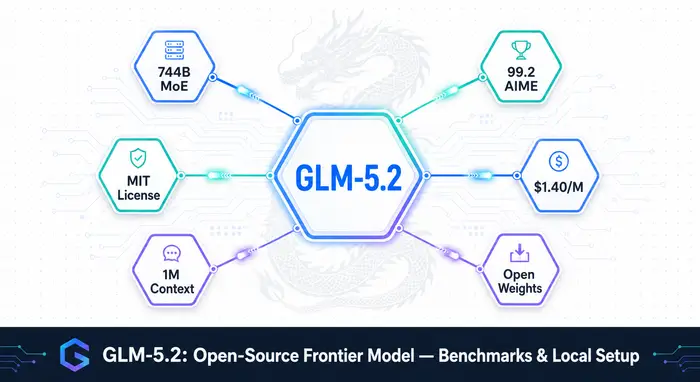
GLM-5.2: Open-Source Frontier Model with 1M Context, Benchmarks, and Local Setup (2026)
GLM-5.2 from Zhipu AI is a 744B open-weight model under MIT license. Benchmarks, pricing, local setup with vLLM and llama.cpp, and how it compares to Claude Opus 4.8 and GPT-5.5.
Models

Kimi K2.7 Code (2026): 1T MoE Coding Model, Benchmarks & Pricing
Kimi K2.7 Code: 1T open-source coding model from Moonshot AI, 32B active MoE, preserve_thinking mode, benchmarks vs GPT-5.5 and Claude Opus.
Models

MiniMax M3 Open Source (2026): 428B Model, 1M Context & Benchmarks
MiniMax M3: 428B open-weights model, 1M context via sparse attention, native multimodal input, competitive coding benchmarks, and 10x cheaper than GPT-5.5.
Models
More stories
View all
Siri AI Review (2026): Apple's Rebuilt Assistant vs ChatGPT & Gemini [Tested]
Siri AI is Apple's rebuilt assistant for 2026. See features, privacy model, device support, and how it compares to ChatGPT and Gemini.
Review

Claude Fable 5 Release (2026): Anthropic's Most Powerful AI Model Explained
Claude Fable 5 is the first Mythos-class model available to the public. State-of-the-art coding, vision, and knowledge work with new safeguards. Pricing, benchmarks, and what it means.
Models

Ideogram AI Review (2026): Free Tier Tested, vs Midjourney & Recraft
Ideogram AI review (2026): we tested free tier, pricing, text rendering, and Ideogram 4.0 vs Midjourney and Recraft. Who should use it?
Review

Genspark Speakly Review (2026): Pricing, Accuracy & Is It Worth It?
Honest genspark speakly review after hands-on testing. See Speakly pricing, accuracy, free tier limits, and how it compares to Otter and Whisper.
Review