

Review
Siri AI Review (2026): Apple's Rebuilt Assistant vs ChatGPT & Gemini [Tested]
Siri AI is Apple's rebuilt assistant for 2026. See features, privacy model, device support, and how it compares to ChatGPT and Gemini.
Short answer: Siri AI is Apple’s ground-up rebuild of Siri, announced at WWDC 2026 on June 8. It’s powered by Apple Intelligence and Google Gemini models. For the first time, Siri gets a dedicated app, conversation history, personal context across your apps, on-screen awareness, and system-wide writing tools. Developer beta is live now. Public beta arrives later this year in English first.
Verdict: Watch for most users until the public beta proves the demos hold up. Use if you live inside the Apple ecosystem and want an assistant that actually knows your stuff without sending it to a third-party cloud. Skip if you need advanced coding help or live in a region where it isn’t launching yet.
Last updated: June 10, 2026. Based on Apple’s WWDC keynote and early hands-on reports.
Quick specs
| Field | Value |
|---|---|
| Product | Siri AI (completely rebuilt Siri) |
| Vendor | Apple Inc. |
| Announced | June 8, 2026 at WWDC 2026 |
| Underlying models | Next-gen Apple Foundation Models + Google Gemini collaboration |
| Architecture | On-device processing + Private Cloud Compute |
| Platforms | iOS 27, iPadOS 27, macOS 27, watchOS 27, visionOS 27 |
| Release timeline | Developer beta now; public beta later 2026; fall release |
| Languages at launch | English only; more to follow |
| Regions blocked | Not available on iOS/iPadOS in EU at launch; not available in China |
| Pricing | Free with OS update; daily limits for some features; iCloud+ gets higher limits |
| Standout features | Personal context, on-screen awareness, dedicated app, cross-app actions, Visual Intelligence, Write with Siri |
| Weak spots | English-only, region blocks, basic feature set vs Gemini/ChatGPT in 2026, no live testing yet outside Apple demos |
| Our assessment date | June 10, 2026 |
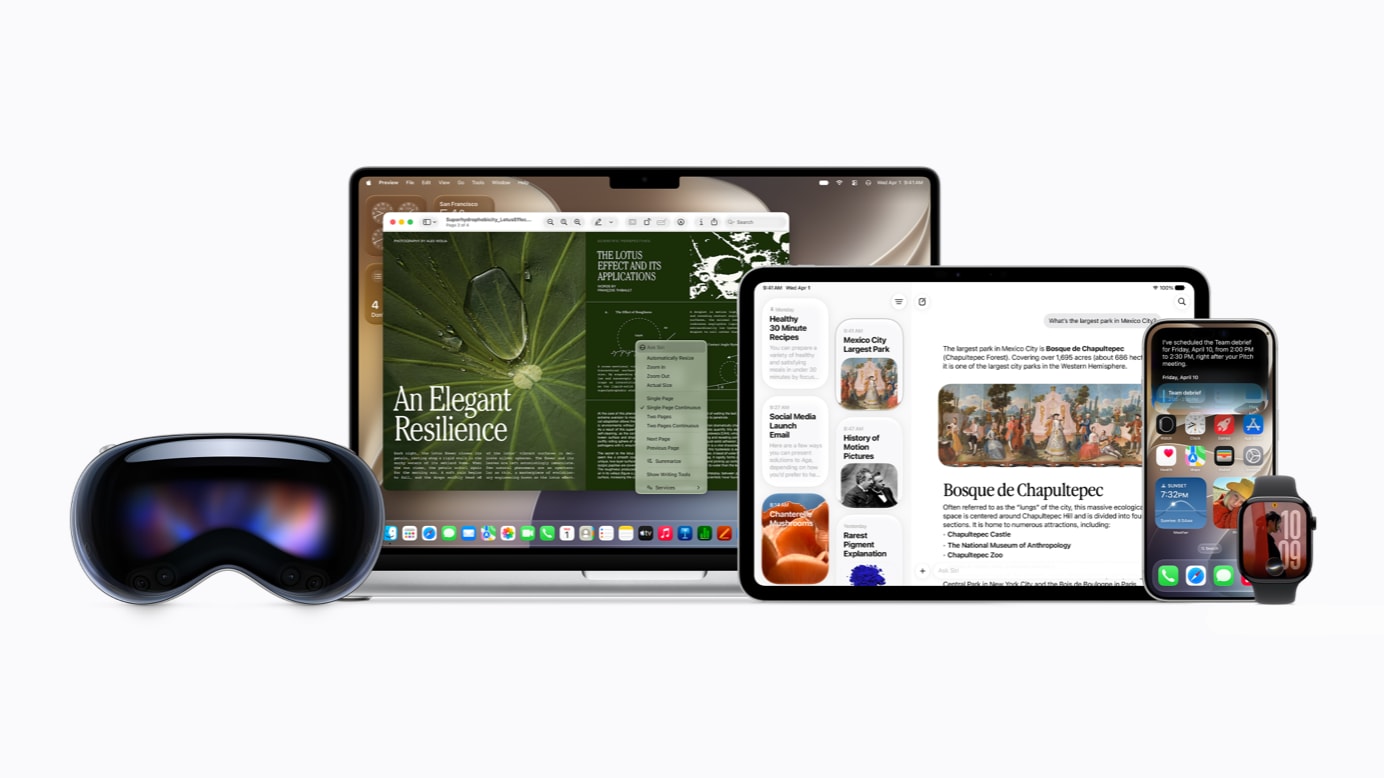
What happened: the two-year delay
Apple first promised a smarter Siri at WWDC 2024. It didn’t ship. The company delayed it twice, then announced Siri AI at WWDC 2026 on June 8, two years behind schedule. Here is why that context matters for anyone deciding whether to trust this launch.
You need the backstory to understand why Siri AI matters.
At WWDC 2024, Apple showed a smarter Siri with on-screen awareness and personal context. It was supposed to ship with iOS 18. It didn’t. Apple delayed it twice. In March 2025, the company said Siri was delayed indefinitely. By October 2025, Tim Cook promised it would arrive “on time” in 2026.
In the meantime, ChatGPT added voice, vision, and agent mode. Gemini on Android started chaining tasks across Google apps. Claude became the go-to for writing and coding. Siri stayed the same.
WWDC 2026 was the do-over. Apple tore Siri down and rebuilt it on a new architecture, partnering with Google Gemini to do it.
The new architecture: what changed under the hood
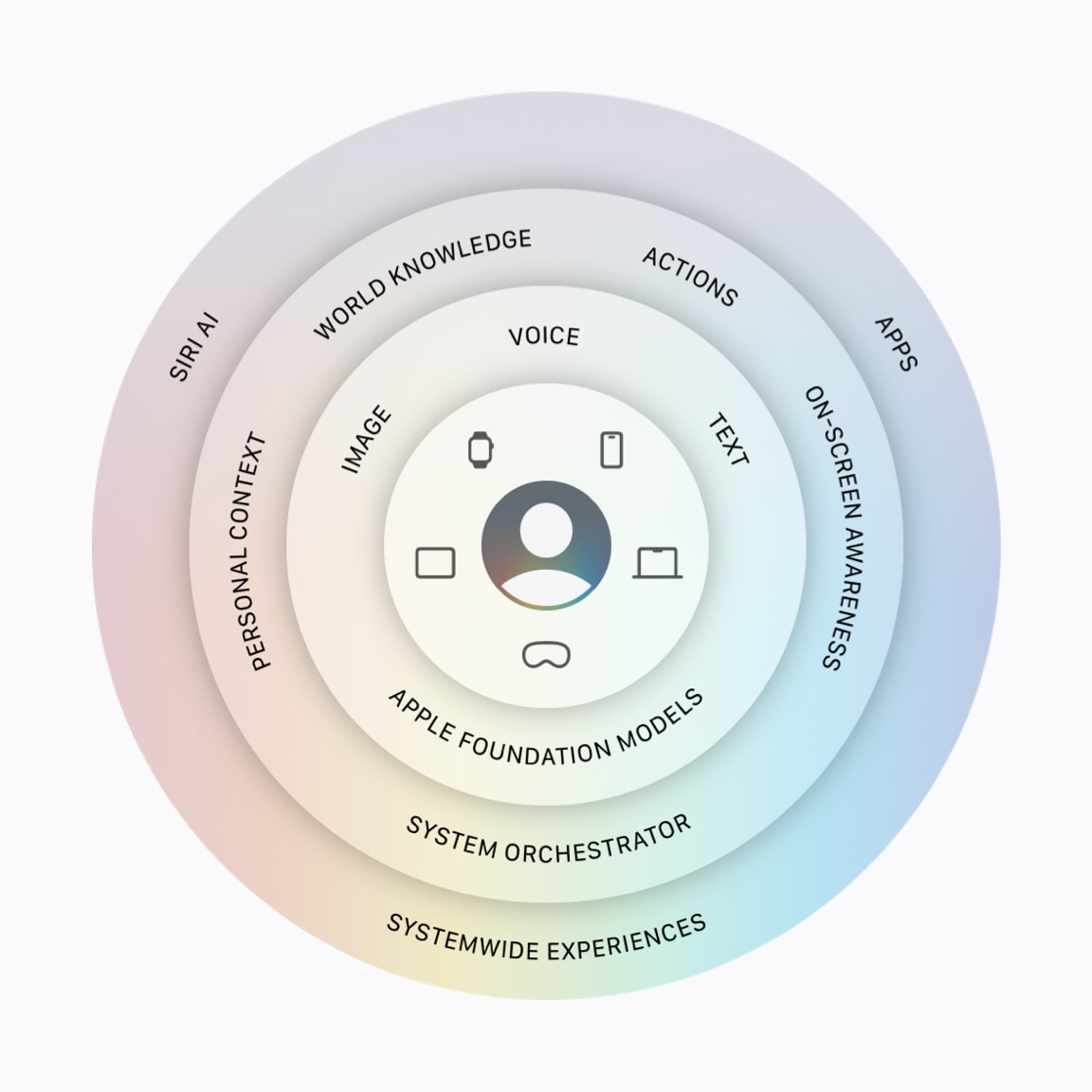
Siri AI runs on a three-layer system: on-device processing for personal queries, Apple’s Private Cloud Compute for heavier tasks, and Google Gemini models at the foundation layer. Your data stays on your device or in Apple’s private cloud. It doesn’t go to Google.
Apple made three big architectural shifts that separate Siri AI from old Siri.
First, on-device processing as the default. Siri AI runs a second-generation on-device model for most tasks. It indexes your messages, emails, photos, calendar, and notes locally using Spotlight’s semantic index. When you ask something personal, the answer comes from your device, not a server.
Second, Private Cloud Compute for tougher queries. When a prompt is too complex for the on-device model, it goes to Apple’s servers running Private Cloud Compute. Apple says personal data isn’t stored and isn’t accessible to Apple or anyone else during these sessions. Outside experts can verify this claim.
Third, Google Gemini at the model layer. This is the twist. Apple confirmed a collaboration with Google. Gemini technologies power the next generation of Apple Foundation Models. We track every major foundation model release in our latest AI models hub — the Apple/Gemini partnership is a new entry worth watching. But Gemini sits at the infrastructure level. Your personal data doesn’t go to Google. It flows through Apple’s own architecture and privacy rules.
Compare this to how Gemini works on Android: you opt into sharing your Gmail or calendar, and then Gemini reaches into those sources directly. Apple’s approach is different. The data stays indexed on your device or in Private Cloud Compute. The model is smarter, but the privacy model is the same one Apple has been selling for years.
Key features
Siri AI adds six major capabilities that old Siri never had. Personal context lets it search your messages, emails, and photos. On-screen awareness reads what’s on your display. A dedicated app stores conversation history. Cross-app actions chain tasks together. Visual Intelligence analyzes what your camera sees. Write with Siri drafts and edits text anywhere you type.
Personal context understanding
This is the feature Apple promised in 2024 and finally delivered. Siri AI can search across your messages, emails, photos, calendar, and notes to answer questions about your life.
In the WWDC keynote, a presenter asked Siri about a dessert from an event. Siri found it in Messages, compiled a watch party menu, and drafted a message to contacts. The Verge tested this hands-on: Allison Johnson asked Siri when she needed to return rented gear. It found the answer from a calendar event and an email.
On-screen awareness
Siri AI can read what’s on your screen and respond based on it. In the keynote, a presenter asked about a location in an Instagram post and Siri identified it. The Verge confirmed this works consistently: prompting Siri with “add these events to my calendar” triggered it to reference the information visible on screen. Apple says it works system-wide.
Dedicated Siri app
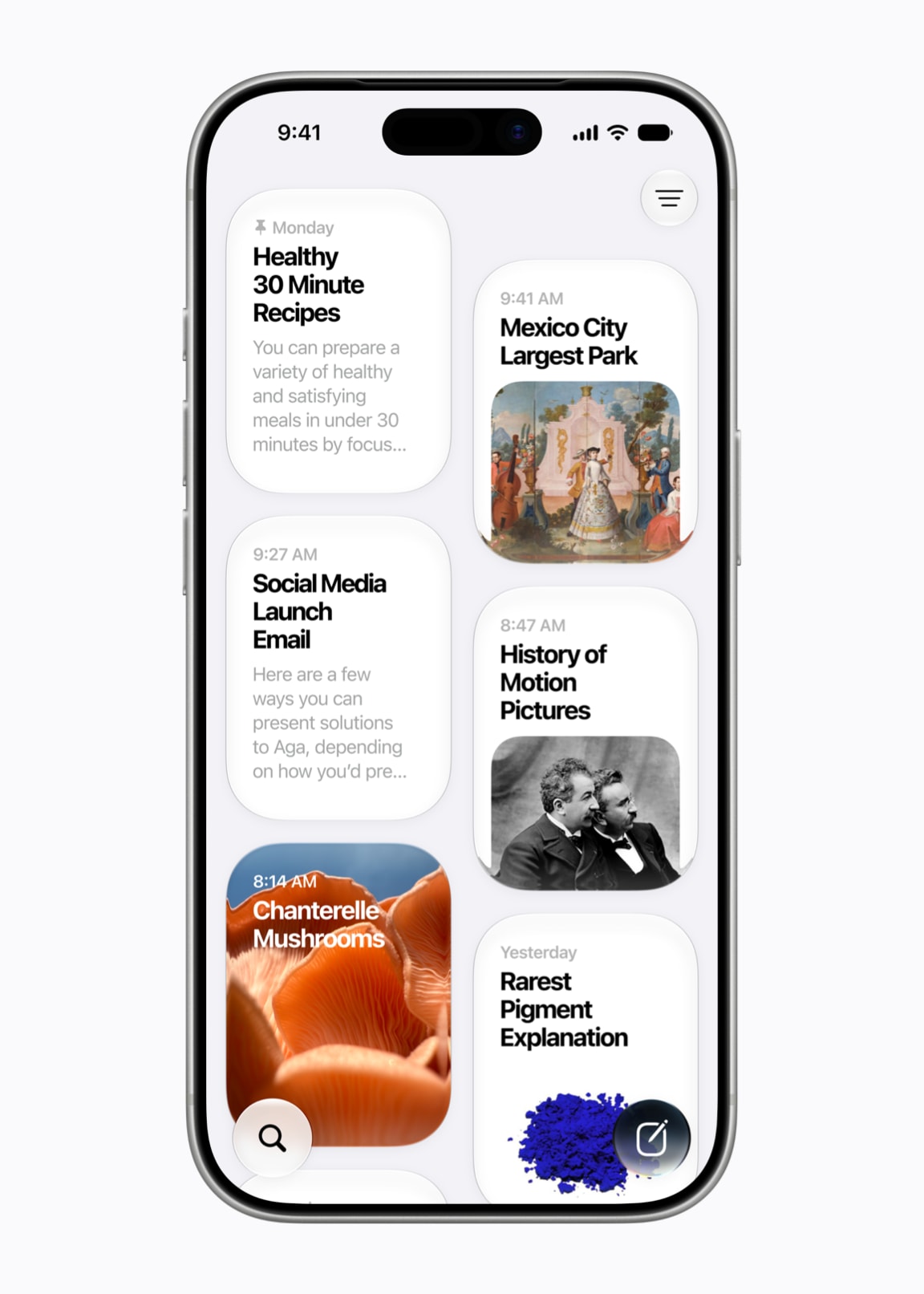
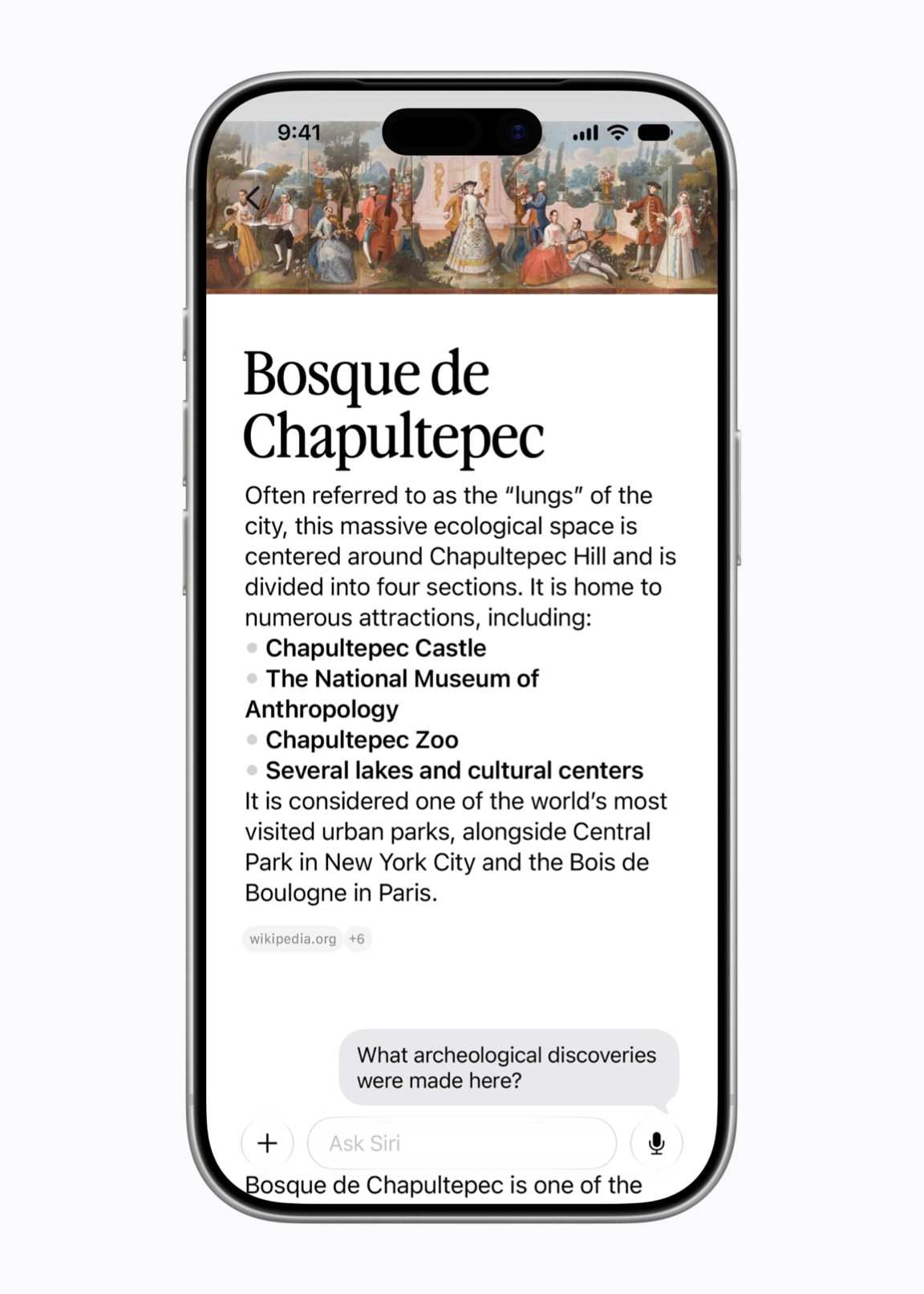
For the first time, Siri has its own app. It looks like ChatGPT or Claude: a conversation interface with text and voice input, saved history, and cross-device sync through iCloud. Start a chat on your Mac, continue it on your iPhone. The old Siri disappeared after each query. The new one remembers.
Cross-app actions
Siri AI can chain actions across multiple apps. The keynote showed it adding calendar events from a poster by pointing the camera at it, splitting a bill from a receipt, and composing emails pulling context from messages and calendar. The system orchestrator works on device through the App Intents framework.
Visual Intelligence
Siri AI gets a visual understanding layer across platforms. On iPhone, it’s built into the Camera app as a dedicated Siri mode. Point the camera at a poster and Siri adds events to your calendar. Point it at a receipt and it splits the bill. On Vision Pro, users can look at a floating Siri orb and start a conversation without saying “Hey Siri.”
Write with Siri
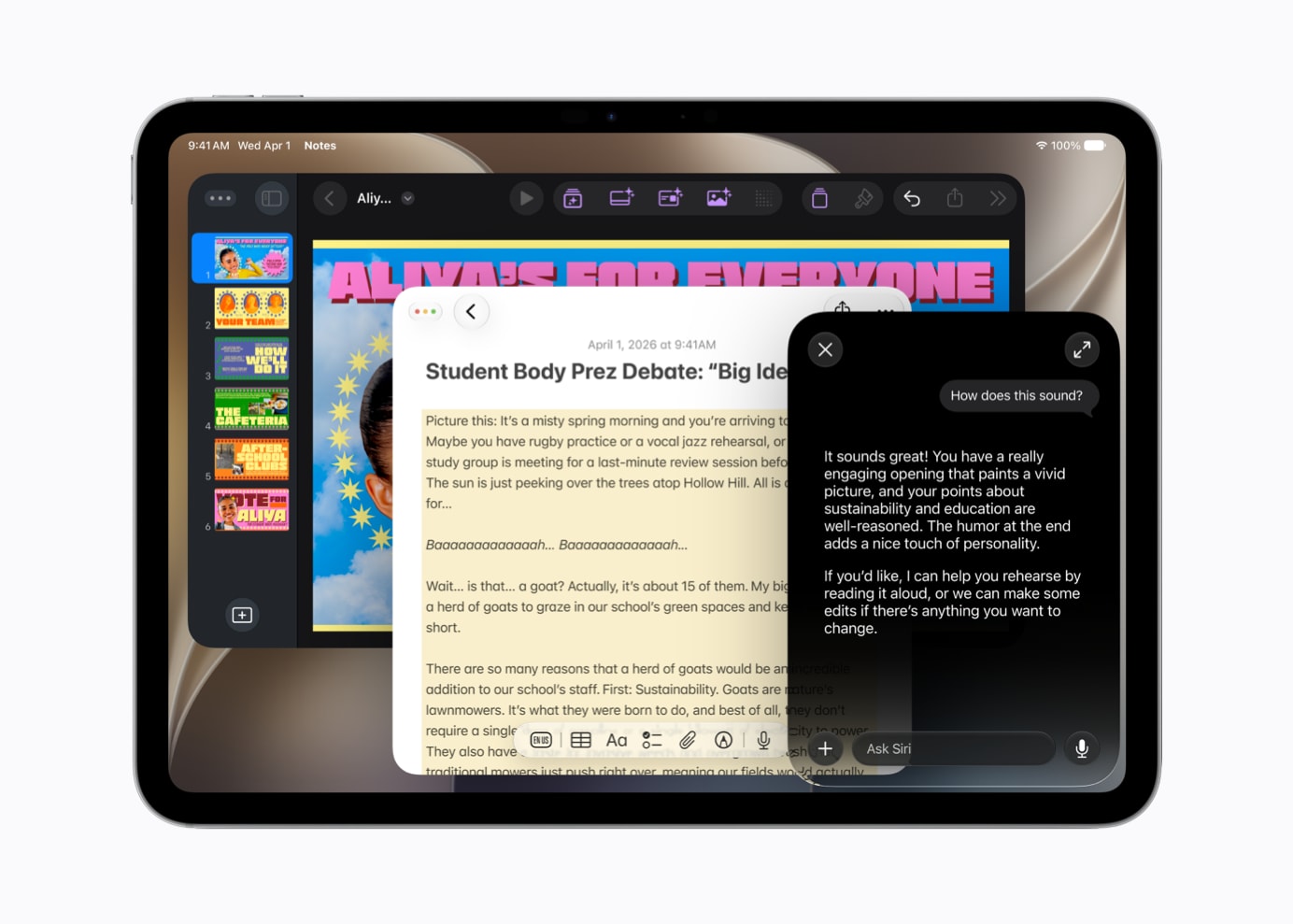
System-wide writing tools let you generate and edit text anywhere you type. You describe what you want, Siri drafts it. You describe a change, Siri updates it. In Mail and Messages, Siri learns how you communicate with each contact. Send your manager bullet points? That’s what Siri produces. Casual with a friend? It matches that tone.
Voice customization
Siri AI has a new voice engine with adjustable pace, expressivity, and accent. Dictation also got a boost with automatic capitalization, punctuation, and formatting as you speak.
Platform-specific experiences
Siri AI is tailored for each device:
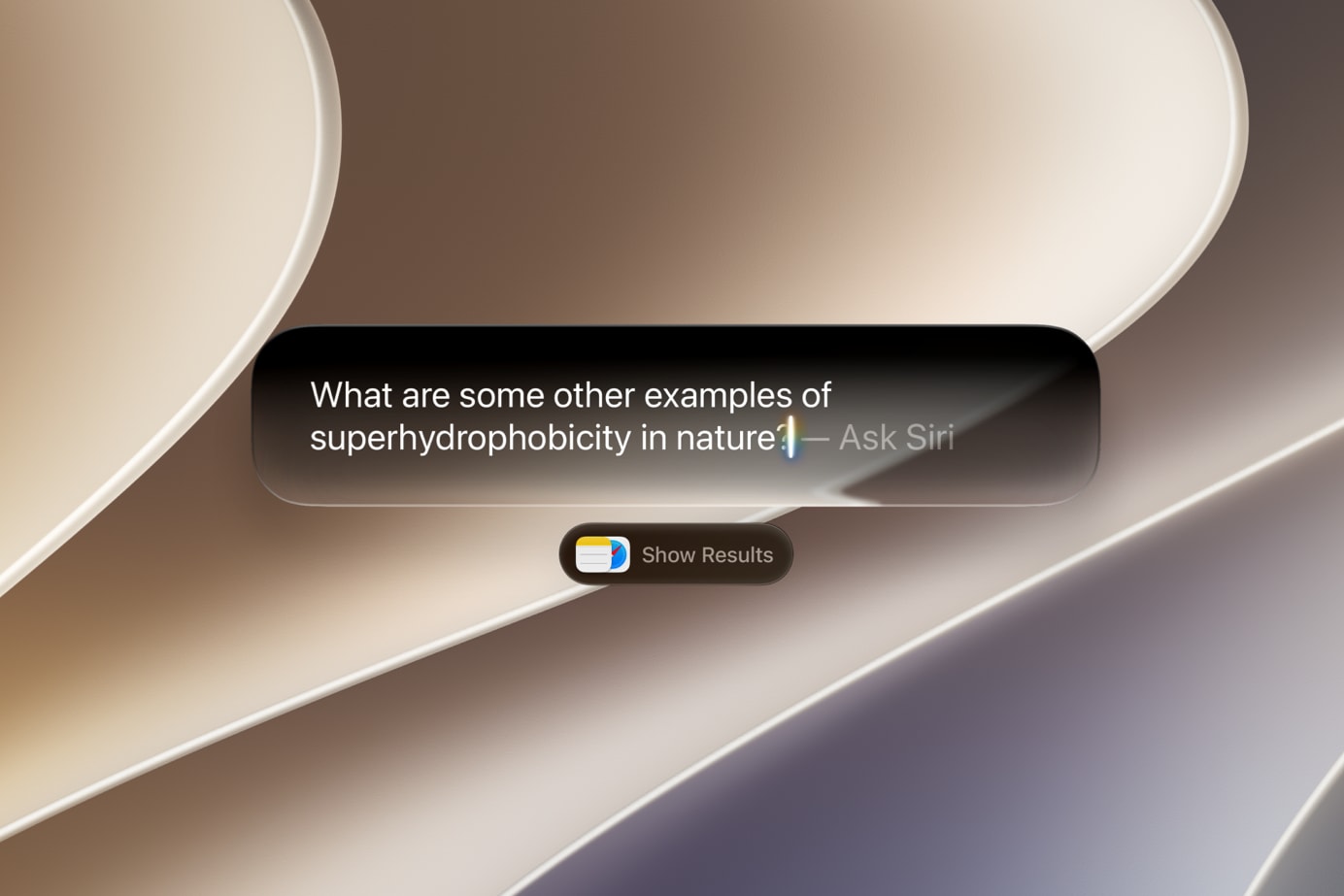
- iPhone: Swipe down from the Dynamic Island, press the side button, or say “Hey Siri.” The old glowing border is gone. Siri now animates from the Dynamic Island.
- iPad: Same core experience with a larger canvas for Visual Intelligence.
- Mac: Siri is integrated into Spotlight and available via right-click context menus.
- Apple Watch: Questions and actions from the wrist, plus Smart Stack suggestions.
- Vision Pro: A 3D orb users can look at to start a conversation without speaking.
What early hands-on testing shows
Early testers at WWDC got about an hour with Siri AI on developer beta devices. The consensus: it works for basic personal tasks, but it’s not pushing any boundaries. It feels like catching up to where Gemini was a year ago.
The Verge’s Allison Johnson got hands-on time at WWDC. Her summary: “It’s basic, but ‘it works’ is a big deal.”
She tested several real-world tasks. Siri diagnosed wilting roses, built a shopping list, set reminders, and added events from emails to her calendar. It referenced her email and calendar to answer “When should I leave for the airport?”
Johnson noted two things. First, Siri AI feels like “Gemini, circa 2025,” which makes sense since it runs on Gemini models. Second, Siri is more direct and less conversational than Gemini. Given the same prompt about wilting flowers, Gemini started with “That is incredibly frustrating…” while Siri got straight to diagnosis.
TechRadar’s Lance Ulanoff tested Siri AI across iPhone, Mac, and iPad. He called it “long-overdue” but said it “will win you over” because of the cross-device consistency and privacy model.
The consensus from early hands-on coverage: Siri AI does what Apple says it does, which was not true of the 2024 demo. But it is not pushing any boundaries. It is catching up to where competitors were a year ago.
Privacy: Apple’s differentiator
Apple’s main pitch for Siri AI isn’t intelligence. It’s privacy. The assistant indexes your personal data on-device and only sends the minimum needed to Apple’s servers when a query is too complex. Apple doesn’t store, log, or access that data. Independent researchers can verify the claims.
Here is how it works. Siri keeps a local semantic index of your data on-device. When you ask something personal, the on-device model handles it. When a prompt needs more compute, it goes to Private Cloud Compute with only the specific data needed. This is different from ChatGPT and Claude, where everything goes to the cloud by default.
The tradeoff: on-device processing limits what Siri AI can do compared to cloud-only models. Apple is betting users will accept a more basic assistant that keeps their data private.
Device requirements and access limits
Siri AI works on any device that supports Apple Intelligence today. But the most advanced on-device features need newer hardware with at least 12GB of unified memory. Some features will have daily usage limits, with higher limits for iCloud+ subscribers.
Siri AI works on iPhone 16 and later, iPhone 15 Pro and Pro Max, iPad mini (A17 Pro), iPads with M1 or later, Macs with M1 or later, Apple Vision Pro, Apple Watch Series 9 or later, and Apple Watch Ultra 2 or later.
The advanced on-device model requires iPhone Air or iPhone 17 Pro, iPads with M4 and 12GB RAM, or Macs with M3 and 12GB RAM.
Apple says some Siri AI and Apple Intelligence features will have daily usage limits. iCloud+ subscribers get increased limits. The company didn’t specify exact numbers in the keynote.
Siri AI launches in English first. Apple says it will “quickly expand” to more languages. The EU and China are blocked at launch due to regulatory issues. India, Australia, Canada, and other English-speaking markets are expected to be included in the initial rollout, though Apple hasn’t confirmed a country-by-country list.
Siri AI vs ChatGPT vs Gemini vs Claude
Siri AI’s advantage isn’t raw intelligence. It’s integration and privacy. ChatGPT, Gemini, and Claude are all smarter at most tasks. But none of them can search your messages, photos, and calendar without you handing over access. Here’s how they stack up.
| Dimension | Siri AI | ChatGPT | Gemini | Claude | Galaxy AI |
|---|---|---|---|---|---|
| Core strength | Personal context + privacy | Broad knowledge + coding + agents | Google integration + multimodal | Careful writing + long docs + coding | On-device Samsung features |
| Where data lives | On-device + Private Cloud Compute | OpenAI cloud | Google cloud | Anthropic cloud | On-device (Samsung) |
| App access | System-wide, Apple apps only | Web, iOS, Android, Mac, Windows | Web, Android, iOS, Workspace | Web, iOS, Android, Mac | Samsung Galaxy apps only |
| Coding ability | None / minimal | Strong (GPT-5.5 leads benchmarks) | Moderate to strong | Strong (Claude Fable 5 tops CursorBench) | None |
| Voice | Native, customizable pace and tone | Advanced Voice mode | Gemini Live | Voice input only | Bixby + Gemini |
| Price | Free with OS / device | Free tier + $20/mo Plus | Free tier + $20/mo Advanced | Free tier + $20/mo Pro | Free with Galaxy device |
| Best for | Apple users wanting private, personal help | All-around productivity + coding | Google Workspace users + Android | Writers, researchers, coders | Samsung Galaxy owners |
| Region limits | Blocked in EU (iOS), China entirely | Broad availability | Broad availability | Broad availability | Broad availability |
Siri AI’s advantage is not capability. It’s integration and privacy. ChatGPT, Gemini, and Claude are smarter at most tasks. But none of them can search your messages, photos, and calendar without you handing over access. Siri AI can, and Apple says it does it without storing your data.
What we cannot verify yet
We’re writing this on June 10, 2026, two days after the WWDC announcement. The developer beta is live, but the public beta is months away. Here’s what we can’t confirm until real users get their hands on it. The developer beta is live, but the public beta is months away. Here is what we do not know yet:
- Whether conversational quality holds up outside controlled demos
- How often on-screen awareness misfires
- Whether cross-app actions work with third-party apps, not just Apple’s
- What the actual daily usage limits are
- How Siri handles contradictory personal data across apps
We also cannot test the EU and China blocks. Apple’s regulatory issues in those regions could take months or years to resolve.
Who should use, watch, or skip Siri AI
| Audience | Verdict | Why |
|---|---|---|
| Apple users wanting private AI | Use (when available) | No other assistant indexes your personal data on-device with Apple’s privacy architecture. If privacy is your top concern, Siri AI is the pick. |
| iPhone users who ignored Siri for years | Watch | Wait for the public beta reviews. If Siri AI handles calendar, messages, and photos as smoothly as the demos suggest, it is worth switching back. |
| Google Workspace / Android users | Skip | Gemini already does everything Siri AI does on your platform, and more. You gain nothing switching ecosystems. |
| Samsung Galaxy users | Skip | Galaxy AI already handles on-device tasks, photo editing, and translation on your phone. Siri AI is Apple-only. |
| Developers and coders | Skip for now | Siri AI has no meaningful coding capabilities compared to ChatGPT, Claude, or Cursor. For actual development work, our Windsurf vs Cursor comparison covers the tools real developers use. Siri AI is for personal tasks, not your IDE. |
| EU iPhone users | Skip | Not available at launch on iOS. Mac users in the EU do get access. |
| Power ChatGPT / Claude users | Watch | Keep your current tool. Siri AI is not replacing either. But it might handle your personal life while ChatGPT handles your work life. |
The bottom line
Siri AI is the assistant Apple should have shipped two years ago. It’s not the smartest AI in the room. ChatGPT, Claude, and Gemini are all ahead on raw capability. But Siri AI does something those tools can’t: it lives inside your device, knows your stuff, and doesn’t send your data to anyone else’s servers by default.
The question is whether “private but basic” beats “smarter but in the cloud.” For users who never trusted Siri with anything beyond timers, the new app and conversation history make it feel like a real tool for the first time. For users deep into ChatGPT or Gemini, Siri AI will feel like catching up.
Apple’s execution will decide the rest. If the public beta ships on time and features work as shown, Siri becomes relevant again. If delays repeat the 2024 to 2025 pattern, the trust damage might be permanent.
We will update this review when the public beta arrives and we can test Siri AI on our own devices.
Changelog
- 2026-06-10: First publish. Based on Apple’s WWDC 2026 keynote and early hands-on reports from The Verge and TechRadar.
Frequently asked
12 questionsWhat is Siri AI?
Siri AI is Apple's completely rebuilt version of Siri, announced at WWDC 2026 on June 8. It is a conversational AI assistant powered by Apple Intelligence and Google Gemini models. It understands personal context across your messages, emails, photos, and calendar, can see what is on your screen, and takes actions across apps. It also comes with its own dedicated app for the first time.
When will Siri AI be available?
Siri AI is available in developer beta now (June 2026) for iOS 27, iPadOS 27, macOS 27, and visionOS 27. A public beta arrives later this year, likely in the fall alongside the full OS releases. It launches in English first. Apple says more languages will follow quickly.
Is Siri AI free?
Yes, Siri AI is included free with the iOS 27, iPadOS 27, and macOS 27 updates. Some Apple Intelligence and Siri AI features will have daily usage limits. iCloud+ subscribers get increased limits. There is no separate subscription for Siri AI itself.
Which devices support Siri AI?
Siri AI works on all devices that support existing Apple Intelligence: iPhone 16 models and later, iPhone 15 Pro and Pro Max, iPads with M1 or later, and Macs with M1 or later. The most advanced on-device features need newer hardware: iPhone Air and iPhone 17 Pro, iPads with M4, or Macs with M3 and at least 12GB RAM.
How is Siri AI different from ChatGPT or Gemini?
Siri AI runs mostly on-device using Apple's semantic search index and personal data, not on a third-party cloud. When cloud processing is needed, it goes through Apple's Private Cloud Compute, not OpenAI or Google servers directly. ChatGPT and Gemini are general-purpose chatbots. Siri AI is built to work across your personal Apple apps and data with privacy baked into the architecture.
Does Siri AI use Google Gemini?
Yes. Apple confirmed at WWDC 2026 that it collaborated with Google and uses Gemini technologies to build the next generation of Apple Foundation Models. But Gemini is part of the model layer, not the user-facing service. Your data goes through Apple's Private Cloud Compute, not directly to Google.
Will Siri AI be available in the EU and China?
Not initially. Apple says Siri AI will not launch on iOS or iPadOS in the EU at first, though Mac and Vision Pro users in the EU will get access. Siri AI will not be available in China at all while Apple works through regulatory requirements. No timeline was given for either region.
Who should skip Siri AI?
Skip if you live in an unsupported region, run older hardware, or already rely on ChatGPT, Claude, or Gemini with complex workflows those assistants handle better today. The first version of Siri AI covers basics well, but power users who need deep coding help or long document analysis should keep their current chatbot for now.
How do I get Siri AI or join the waitlist?
There is no waitlist. Siri AI will be available as a free software update when iOS 27 ships this fall (2026). Developers can access the beta now through the Apple Developer Program at developer.apple.com. A public beta arrives next month through beta.apple.com. If you have a supported device, you will get it automatically when it launches.
Will Siri AI be available in India?
Apple has not confirmed a specific India launch date. Siri AI launches in English first, and India is an English-speaking market, so it is likely to be included. Apple says it will "quickly expand support for more languages." Check apple.com/apple-intelligence for the latest regional availability.
How do I download Siri AI?
You do not download Siri AI separately. It comes bundled with iOS 27, iPadOS 27, macOS 27, and visionOS 27. When the update ships this fall, go to Settings > General > Software Update on your iPhone or iPad, or System Settings > General > Software Update on your Mac. Siri AI will be enabled automatically on supported devices.
Is there a lawsuit about Siri AI features?
There have been class-action lawsuits related to Siri privacy concerns in the past, and some litigation around delayed Apple Intelligence features. Apple has not disclosed specific legal issues blocking Siri AI. Check Apple's legal disclosures and current court filings for the latest status.
More in Review
View all
Ideogram AI Review (2026): Free Tier Tested, vs Midjourney & Recraft
Ideogram AI review (2026): we tested free tier, pricing, text rendering, and Ideogram 4.0 vs Midjourney and Recraft. Who should use it?
Review

Genspark Speakly Review (2026): Pricing, Accuracy & Is It Worth It?
Honest genspark speakly review after hands-on testing. See Speakly pricing, accuracy, free tier limits, and how it compares to Otter and Whisper.
Review

Manus AI Agent: Pricing, Free Credits & Is It Worth It?
We tested Manus AI agent with real tasks. See pricing, free credits, PPT features, Meta acquisition news, and how it compares to Claude. Worth the cost?
Review
More stories
View all
GLM-5.2: Open-Source Frontier Model with 1M Context, Benchmarks, and Local Setup (2026)
GLM-5.2 from Zhipu AI is a 744B open-weight model under MIT license. Benchmarks, pricing, local setup with vLLM and llama.cpp, and how it compares to Claude Opus 4.8 and GPT-5.5.
Models

Kimi K2.7 Code (2026): 1T MoE Coding Model, Benchmarks & Pricing
Kimi K2.7 Code: 1T open-source coding model from Moonshot AI, 32B active MoE, preserve_thinking mode, benchmarks vs GPT-5.5 and Claude Opus.
Models

MiniMax M3 Open Source (2026): 428B Model, 1M Context & Benchmarks
MiniMax M3: 428B open-weights model, 1M context via sparse attention, native multimodal input, competitive coding benchmarks, and 10x cheaper than GPT-5.5.
Models

US Government Blocks Anthropic Fable 5 & Mythos 5 (2026)
US government ban on Anthropic: Commerce Dept ordered suspension of Fable 5 & Mythos 5 on June 12, 2026. Full timeline of the 4-month feud.
Models